At the heart of ALUS is a simple but powerful idea: conservation works best when it is shaped by the people who know the land.
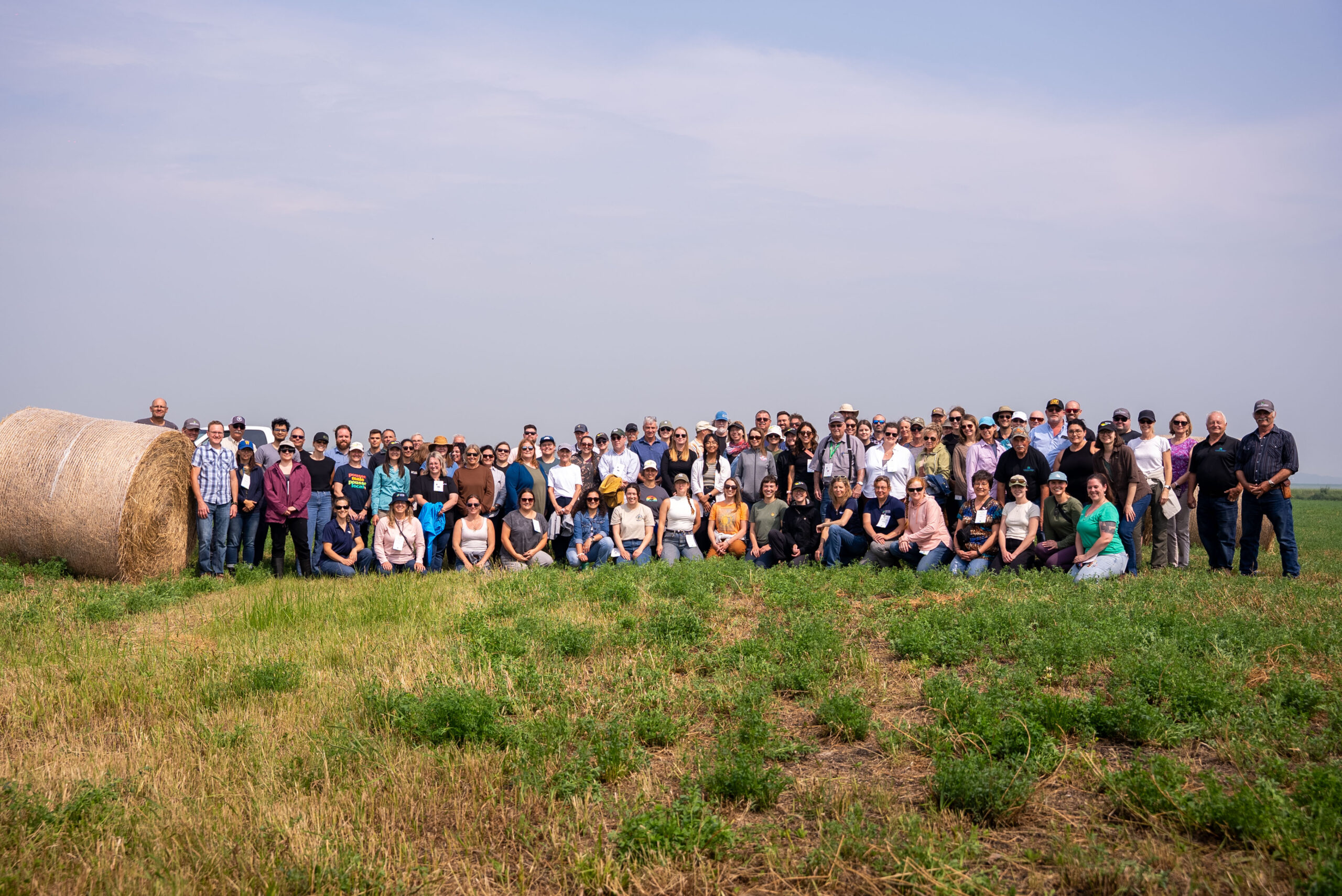
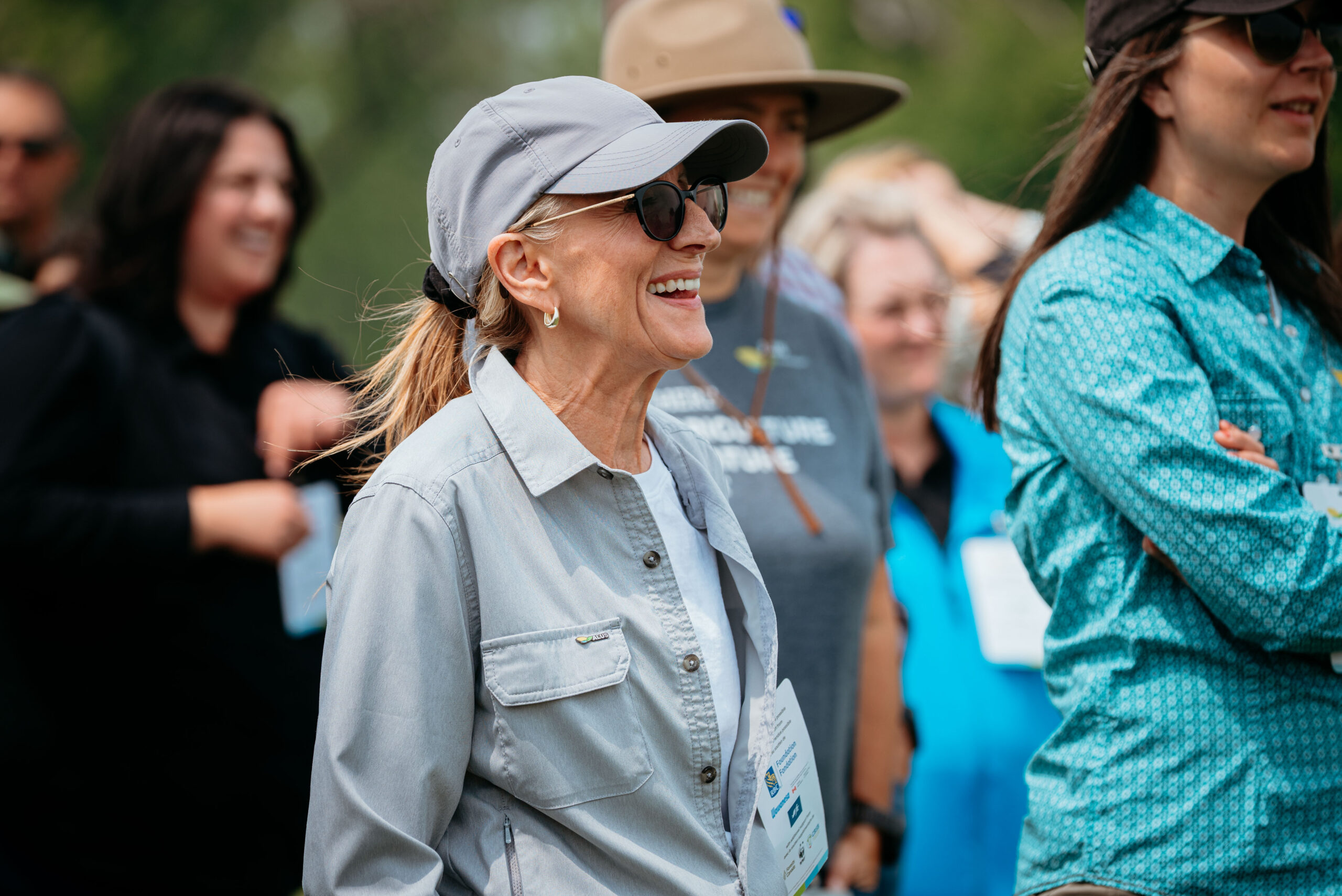
Participants at Spring Bank Angus, where farmer Wayne Chubaty shared how natural infrastructure can temporarily store water on the landscape, slowing peak flows and reducing strain on local roads.
Guided largely by farmers, each community builds on local knowledge to make decisions that fit its landscape and priorities. The annual ALUS Field Conference brings those perspectives together, creating opportunities to learn from one another and share stories, practical insights, and firsthand experience, strengthening the network.
From Manitoba Roots to National Impact
2026 ALUS National Field Conference hosted by ALUS Seine Rat Roseau, Manitoba – July 15-17
This year marks 20 years since ALUS began as a pilot project in the Rural Municipality of Blanchard, Manitoba. Returning to Manitoba for the conference was both a celebration and a homecoming. In Steinbach, coordinators, national staff, Partnership Advisory Committee members, farmers, funders and partners came together to honour the program’s roots and look ahead to its future. Among them were people who had helped launch ALUS two decades ago, alongside others who were still in kindergarten when those first seeds were planted.
As the conference celebrated ALUS’ first 20 years, CEO Jordan Sinclair shared her vision for the next decade:
“Twenty years ago, ALUS was an idea tested by a handful of farmers in Manitoba. In 2015, we were on about one in every 1,000 farms in Canada. Today, we’re on one in every 100. Every step of that growth reflects farmers taking action for nature and creating lasting benefits for their communities. Looking ahead, I’d like to see us on one in 10 farms across the country by 2035. That’s roughly 20,000 farms helping to restore wetlands, plant habitat, improve water quality and strengthen the resilience of Canada’s landscapes. It’s a big goal, but our foundation is strong, our momentum is real, and it’s the scale of impact our landscapes need. I believe Canadian farmers are ready to lead the way.”
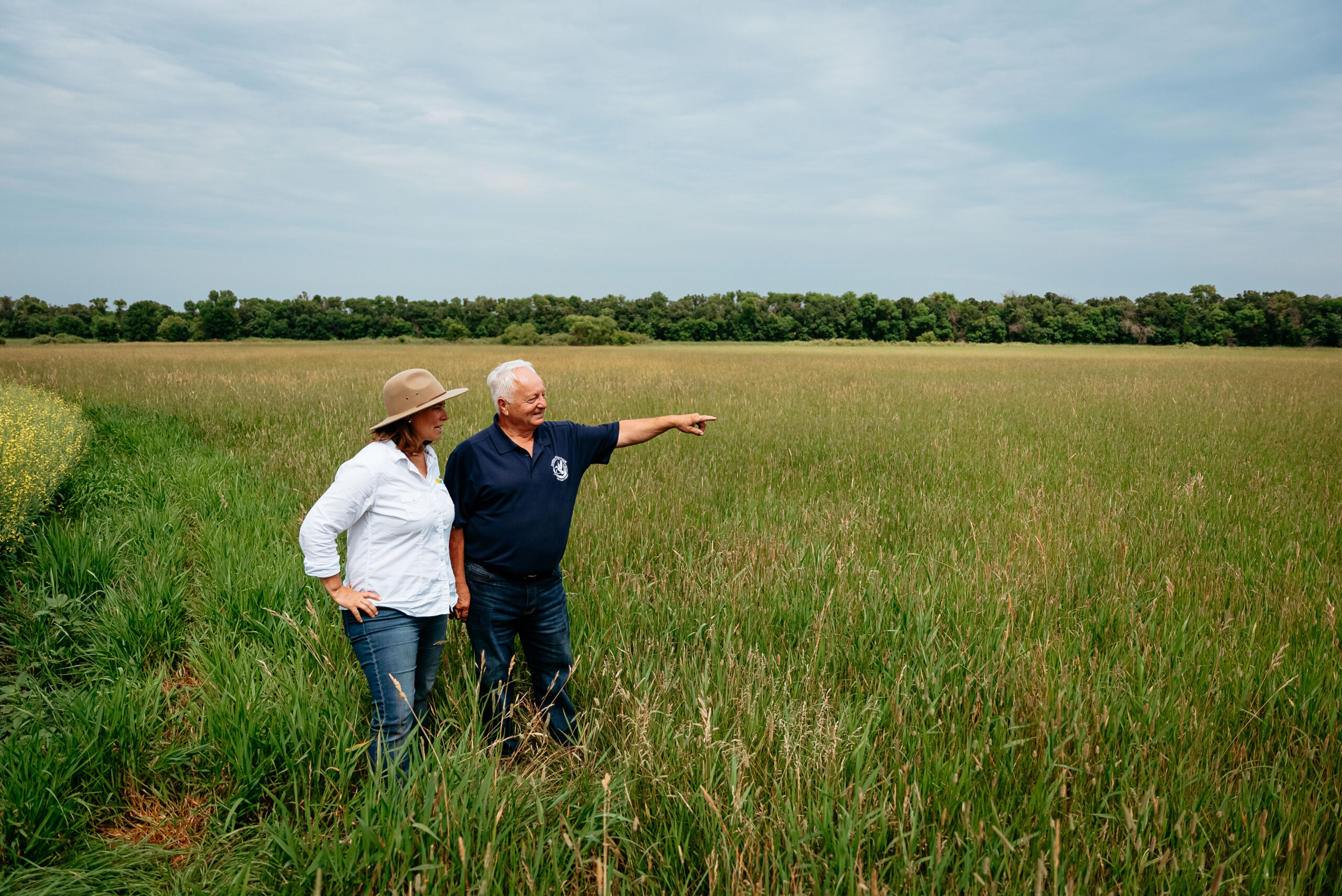
Farmer Harold Janzen shows ALUS CEO Jordan Sinclair a low-lying floodplain restored to perennial grasses at Marsh River Farms during the 2026 ALUS National Field conference
Day 1: Building Resilience on the Prairies
By the first morning, with some participants wide awake and others still adjusting to the time change, the group came together over coffee at the Mennonite Heritage Village, a setting that gently reflected the many peoples who have farmed and shaped southern Manitoba over generations. Classroom sessions helped participants connect and settle into the conference, while the local coordinators introduced the Seine-Rat Rousseau Watershed, a landscape of three interconnected sub-watersheds spanning more than 7,000 km², setting the stage for the coming afternoon field tours.
That afternoon, some in sunhats and others in raincoats, participants headed into the field to tour ALUS stewardship projects that showcased the hard work and innovation of farmers listening to the land.
The first stop was Marsh River Farms, which celebrated its 100th anniversary this summer. Harold Janzen welcomed participants aboard a wagon pulled by his trusty red tractor and led them to an 11-acre floodplain restored to perennial grasses.
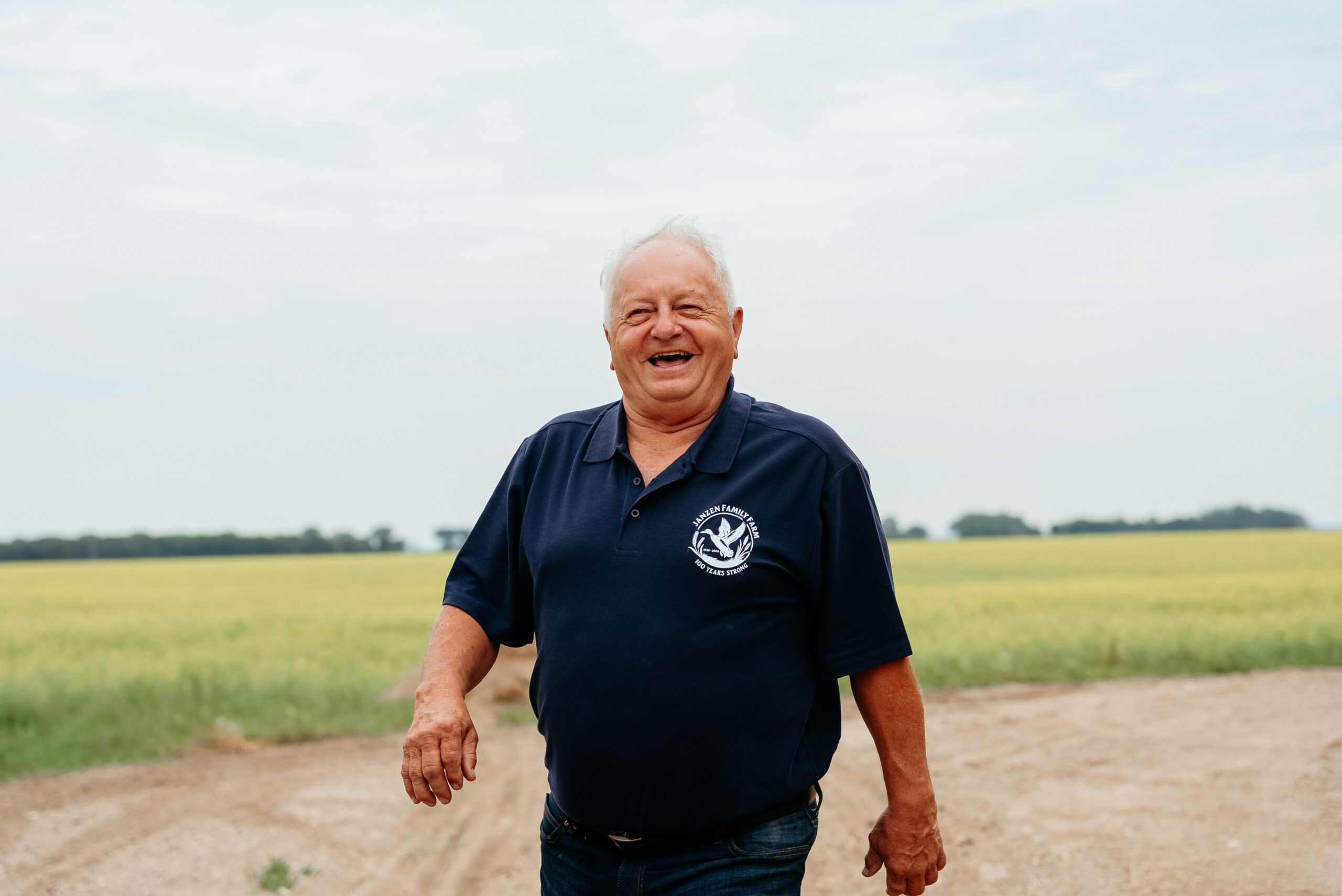
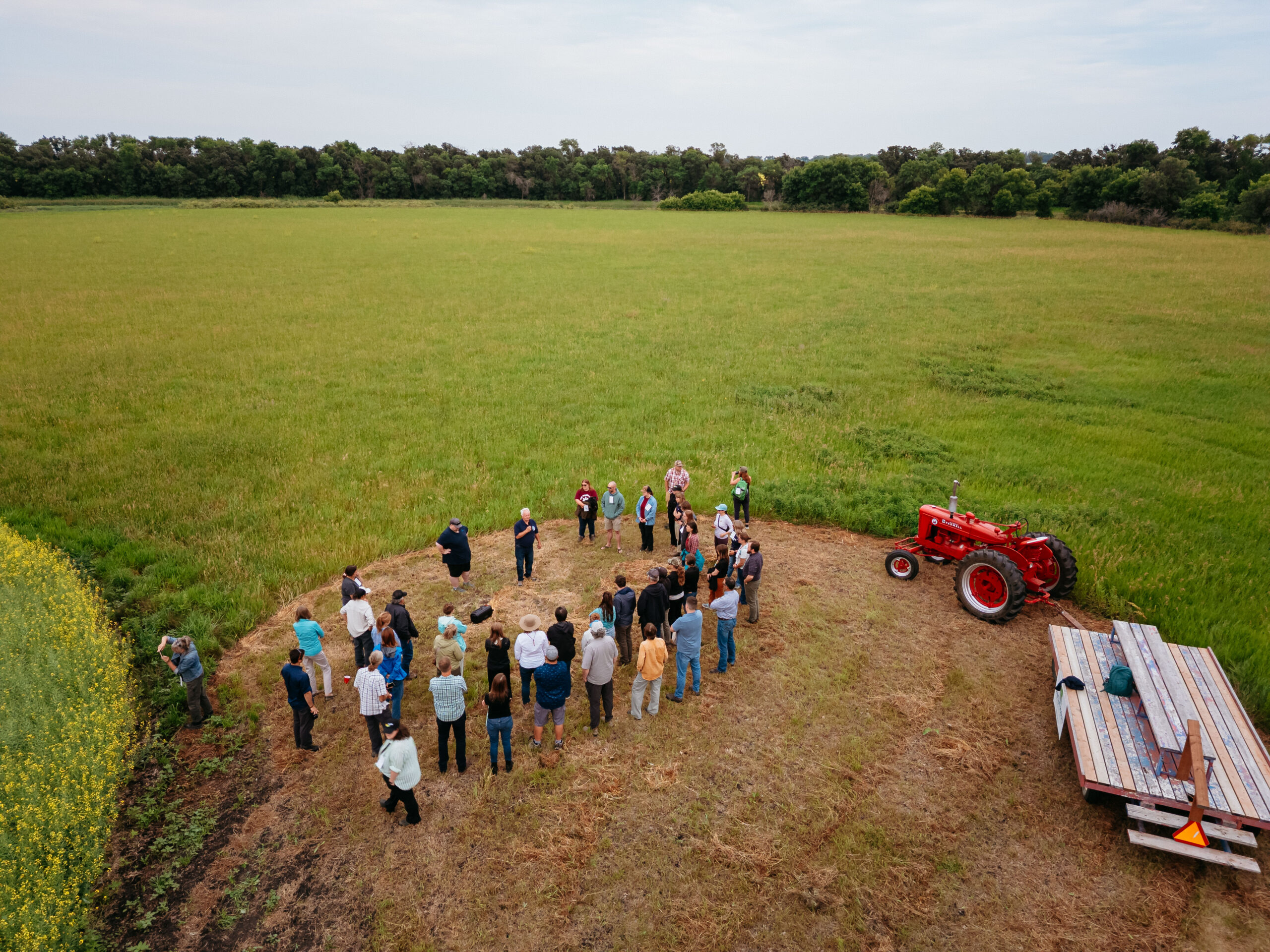
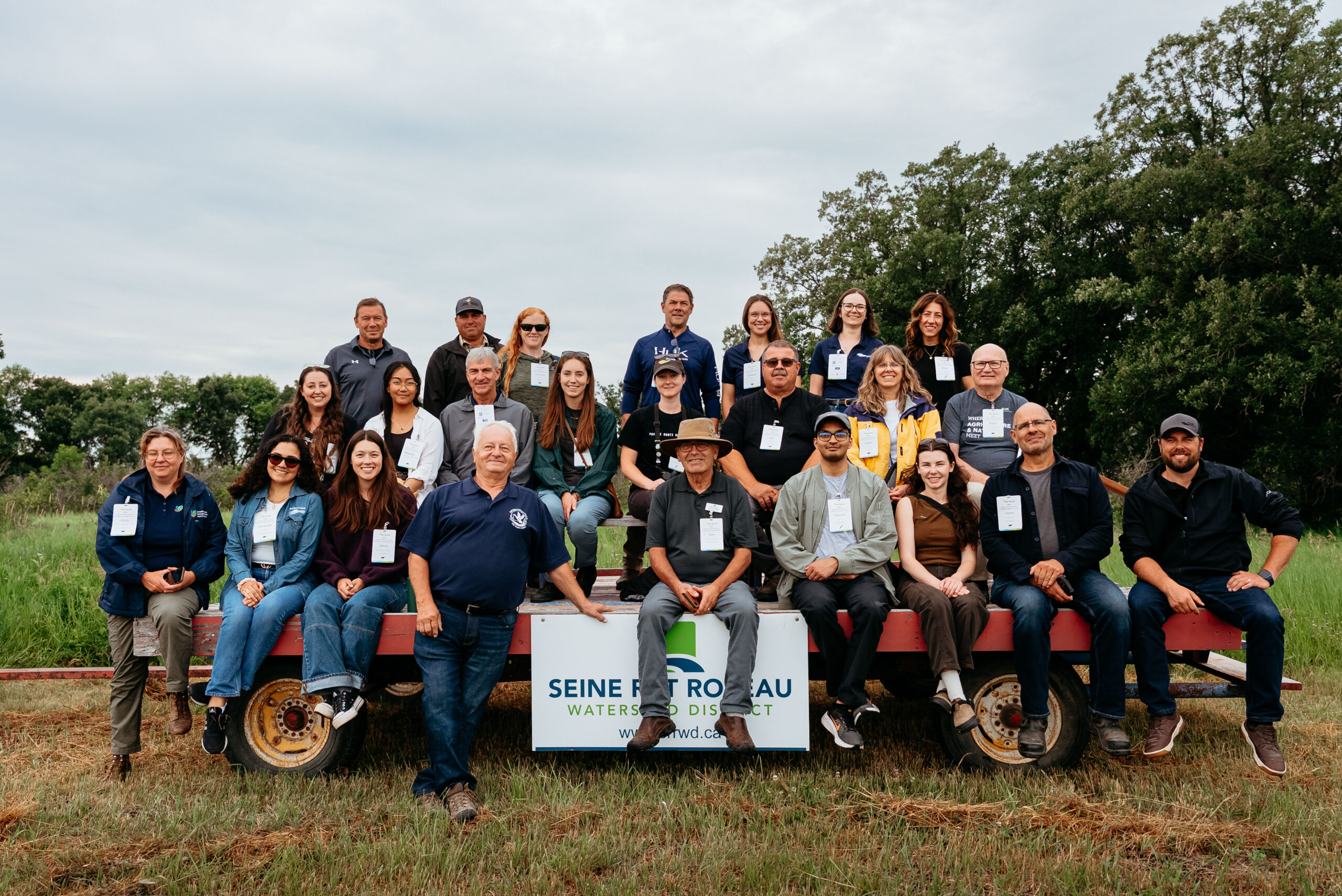
ALUS farmer Harold Janzen >> Scroll through to see participants at Marsh River Farms, where farmer Harold Janzen shares a low-lying floodplain restored to perennial grasses >> Participants enjoying a tractor ride during the 2026 ALUS National Field conference
As Harold explained:
“The perennial prairie has really proven itself. Since we seeded it, the area has flooded twice, including one time with seven inches of water. Despite that, it survived and thrived. The erosion is gone and it’ll provide forage for our cattle, we’re getting value from a piece of land that used to be difficult to farm”.
At Millview Grain, farmer Royden Loewen shared the history of his organic farm and spoke about establishing ALUS projects on the land. When explaining how one project had come to be, Royden said:
“It was wonderful how quickly the area responded. We planted the shelterbelt, and native plants just started showing up and filling in the gaps. Now you’ve got this corridor of trees stretching a mile, providing habitat for wildlife and helping protect the creek at the same time“.
Participants then strolled alongside this shelterbelt, seeing for themselves the potential for restoring nature in marginal areas on farmland. Royden also demonstrated material used to create a low-level field crossing that prevents erosion and improves access to his fields, showing how conservation and farm operations can go hand in hand.
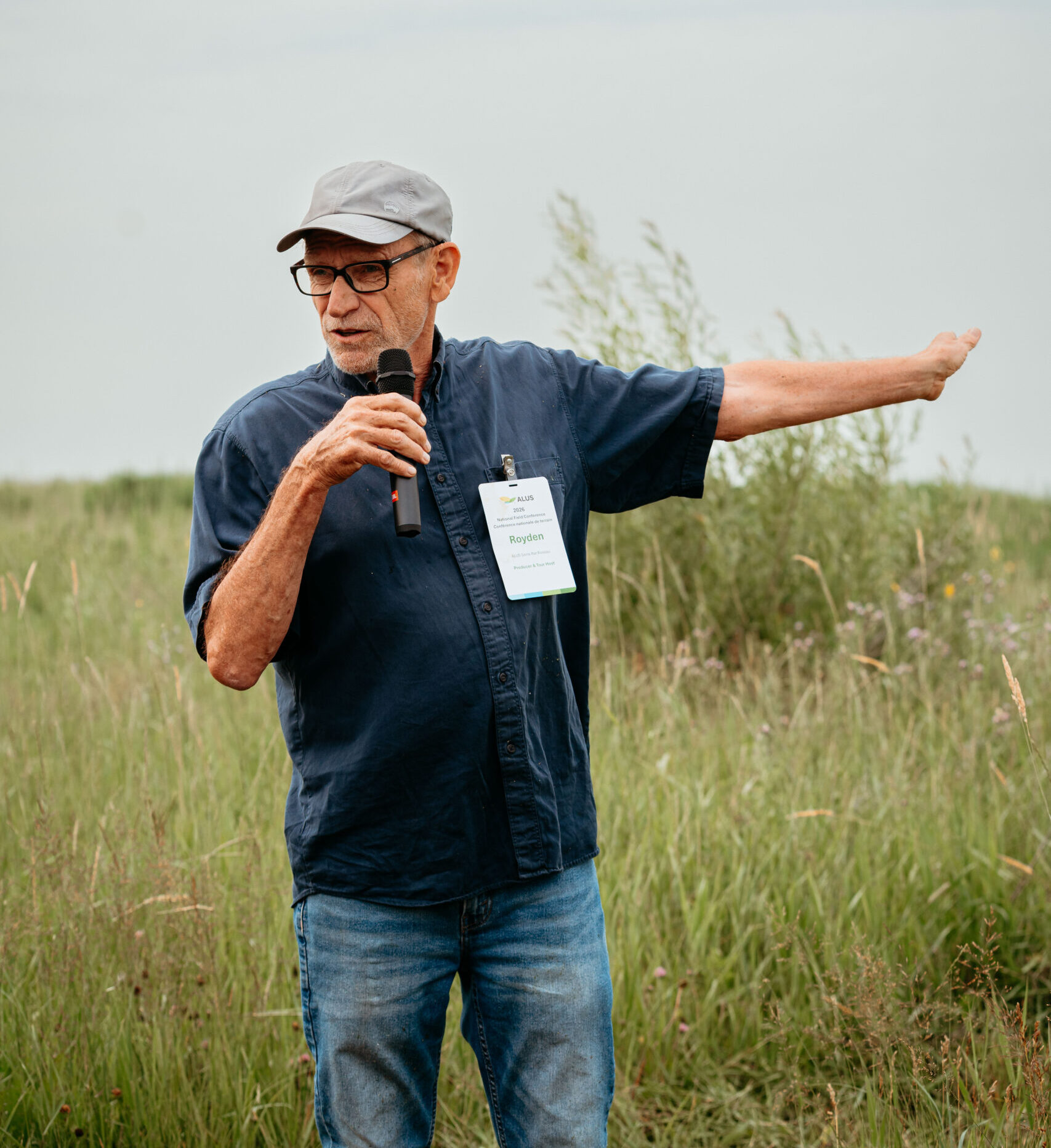
Royden Loewen, Millview Grain, showing participants a shelterbelt project on his farm during the 2026 ALUS National Field conference
Day 2: Keeping Water Where it Falls
The second morning offered another chance to learn from the network, with Partnership Advisory Committee members from across the country sharing insights.
In the afternoon, participants visited the Claringbould family beef farm, where Neil Claringbould spoke about cover cropping, grazing management and the resilience that comes from prioritizing soil health. Participants then had a chance to experience soil health firsthand, taking part in an activity that measured water absorption in a lush cover crop alive with insects.
Joey Pankiw, a local ALUS Coordinator reflected:
“One of the biggest benefits is water management. We’re trying to keep the water where it falls rather than watching it run off the field”
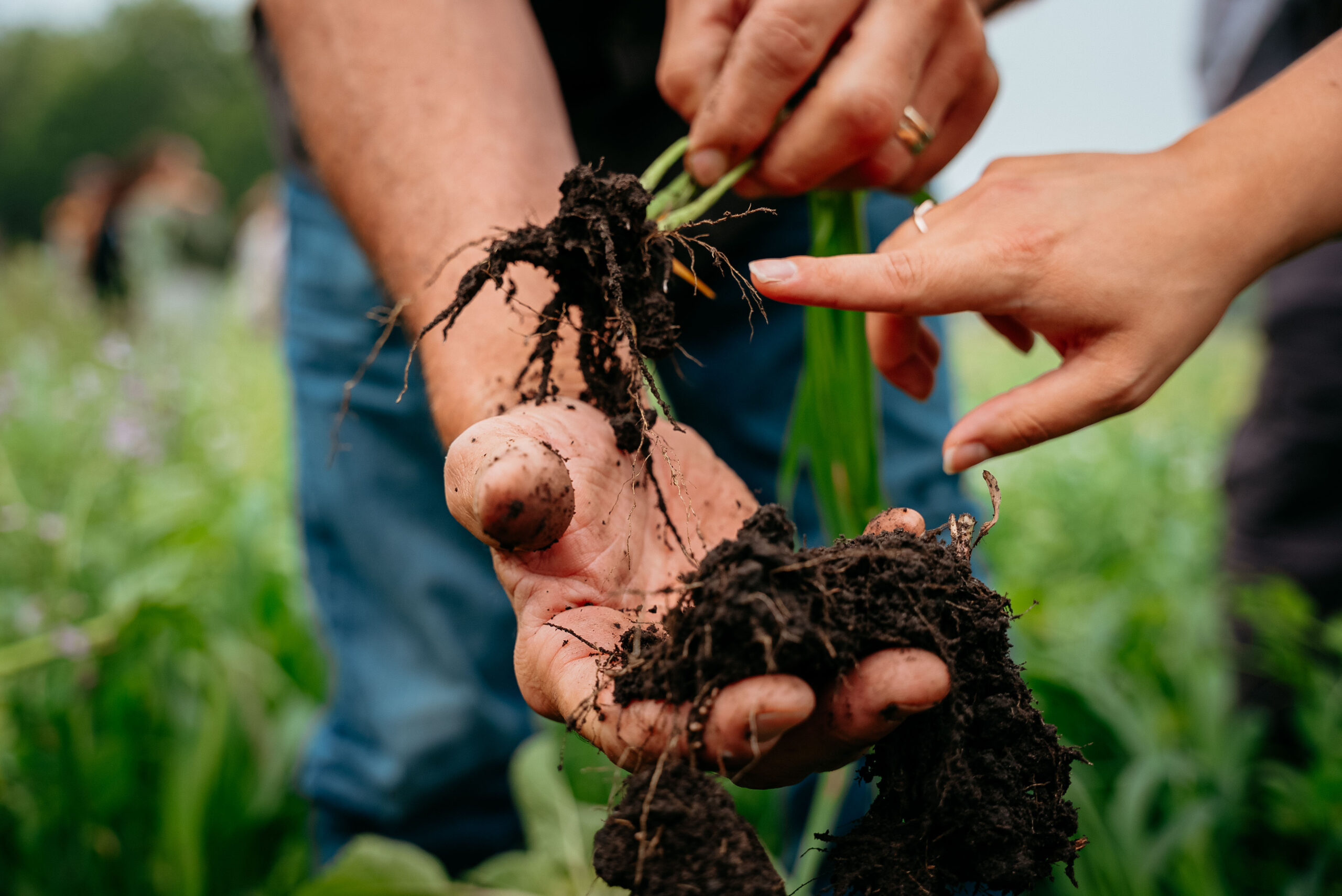
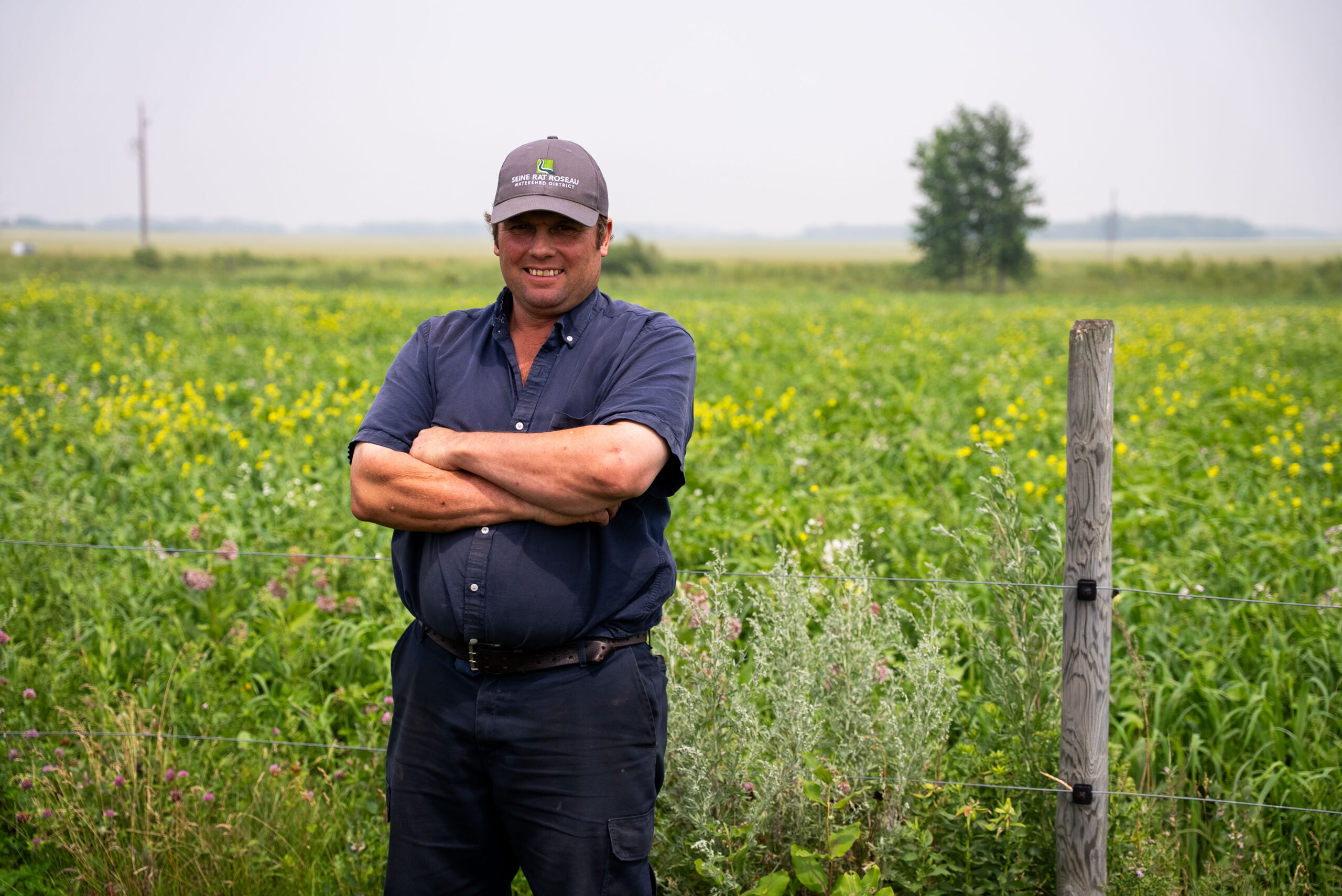
Soil health demonstrations on the Clarinbould’s Beef farm during the 2026 ALUS National Field conference >> Becky Devaleriola, ALUS Lac Ste Anne coordinator >> Neil Claringbould
The next stop was Spring Banks Angus, where farmer Wayne Chubaty has implemented a range of projects that contribute to cleaner water, healthier soils and enhanced biodiversity, including perennial grasses, cover crops, riparian exclusion fencing and water retention features. One highlighted project demonstrated how natural infrastructure can temporarily store water on the landscape, slowing peak flows, reducing erosion, and easing pressure on local roads.
While discussing benefits of this temporary wetland, Wayne said:
“You’d be amazed at who shows up. Once the water starts holding on the landscape, the wildlife comes with it. We’ve seen ducks, deer, coyotes…”
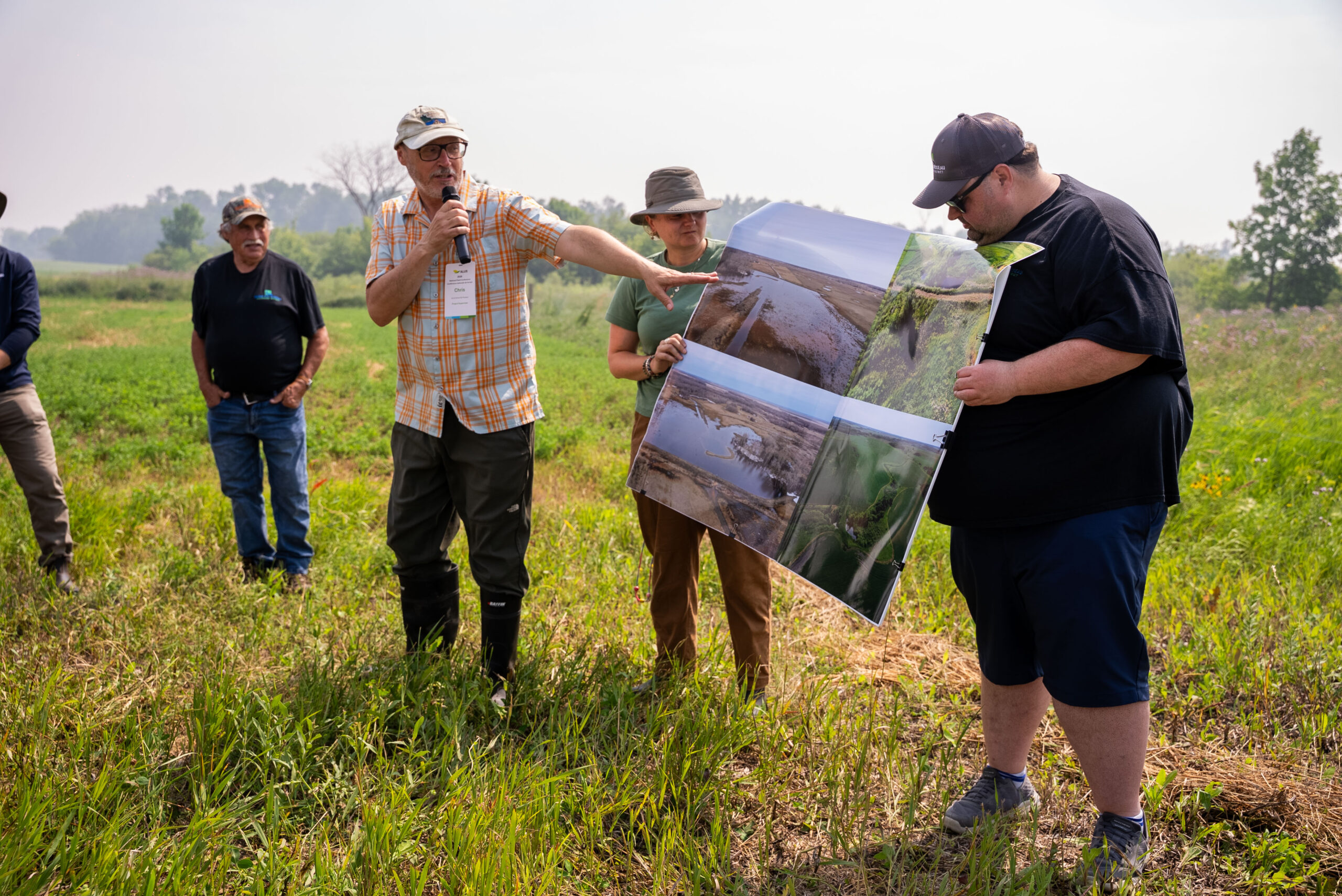
Joey Pankiw, Chris Randall and Virginia Janzen of the Seine Rat Roseau Watershed District present a natural infrastructure project on Spring Bank Angus Farm during the 2026 ALUS National Field conference
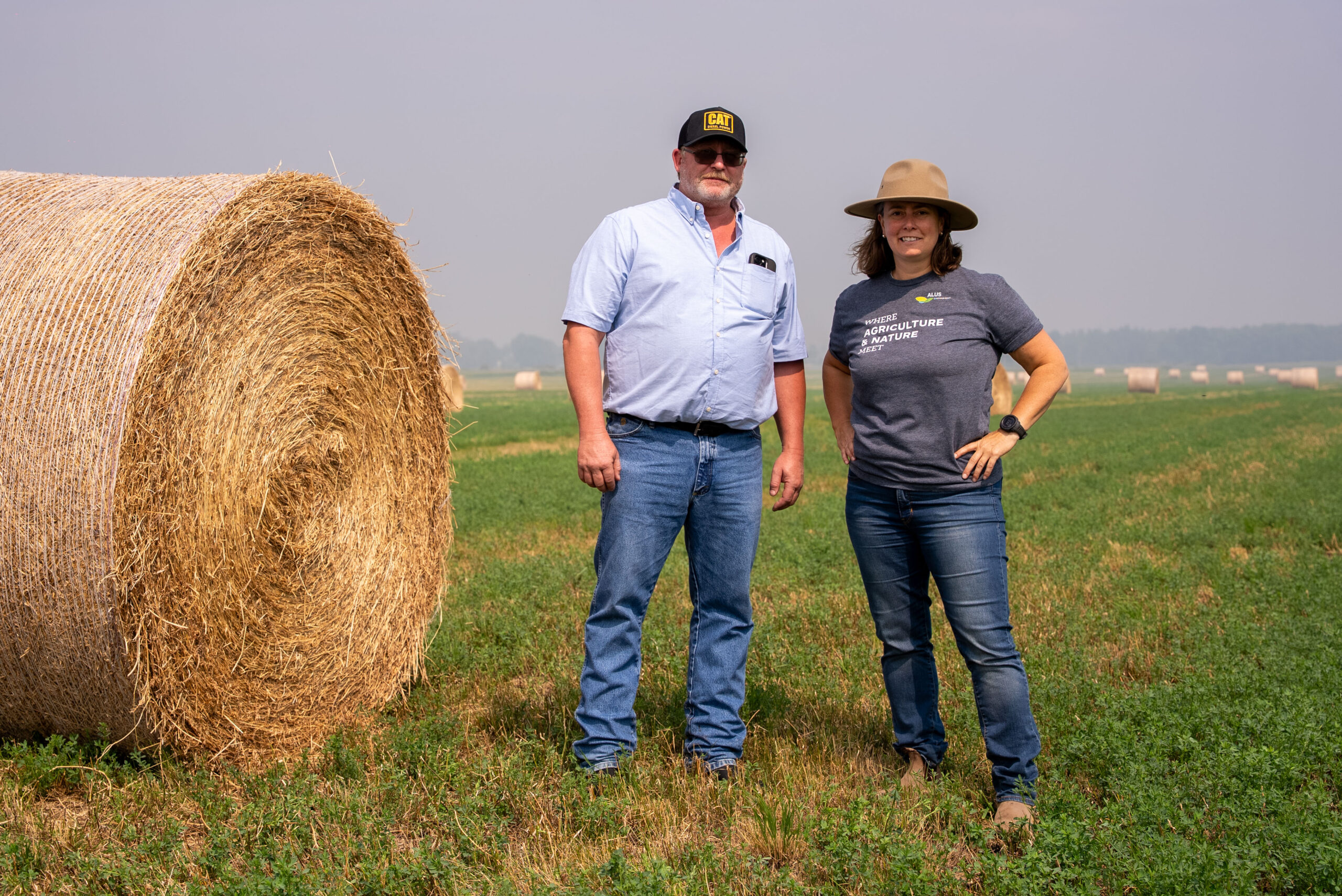
>> Wayne Chubaty and ALUS CEO, Jordan Sinclair
Connected through Conservation
Though each farm and stewardship project had its own character, shaped by the farmer’s intuition, management approach, and the unique features of the land, the connections between them were impossible to miss. As part of the same watershed and ecosystem, water, air, and wildlife move across the landscape. It was clear that the nature-based solutions implemented on one farm were contributing to the health and resilience of the whole region.
2026 Dave Reid Awards
Evenings brought another kind of learning: time to laugh, connect, and share meals together. On the final evening, participants celebrated the 2026 Dave Reid Award winners, recognizing farmers whose leadership, innovation, and commitment to conservation embody the spirit of ALUS stewardship.
Read more about this year’s Dave Reid Award recipients—Sean and Holly LaBrie (ALUS Mountain View County), Harold Janzen (ALUS Seine Rat Roseau), and Larry Zieger (ALUS Wetaskiwin Leduc)—in our feature stories.
Thank you to all who contributed to the 2026 ALUS National Field Conference
With gratitude to all who participated, hosted, and supported this year’s gathering, ALUS extends heartfelt thanks to the Seine Rat Roseau Watershed District and its ALUS coordinators, Joey Pankiw and Dani Gosselin. as well as the whole Seine Rat Roseau Watershed District team.
As participants returned home, the learning will continue to ripple outward: strengthening relationships, deepening networks, and inspiring ideas that can take root in ALUS communities across Canada.
2026 ALUS National Field Conference made possible by

With support from