Through ALUS Wetaskiwin-Leduc and ALUS Parkland, he is protecting sensitive areas and sharing workable solutions with other farmers
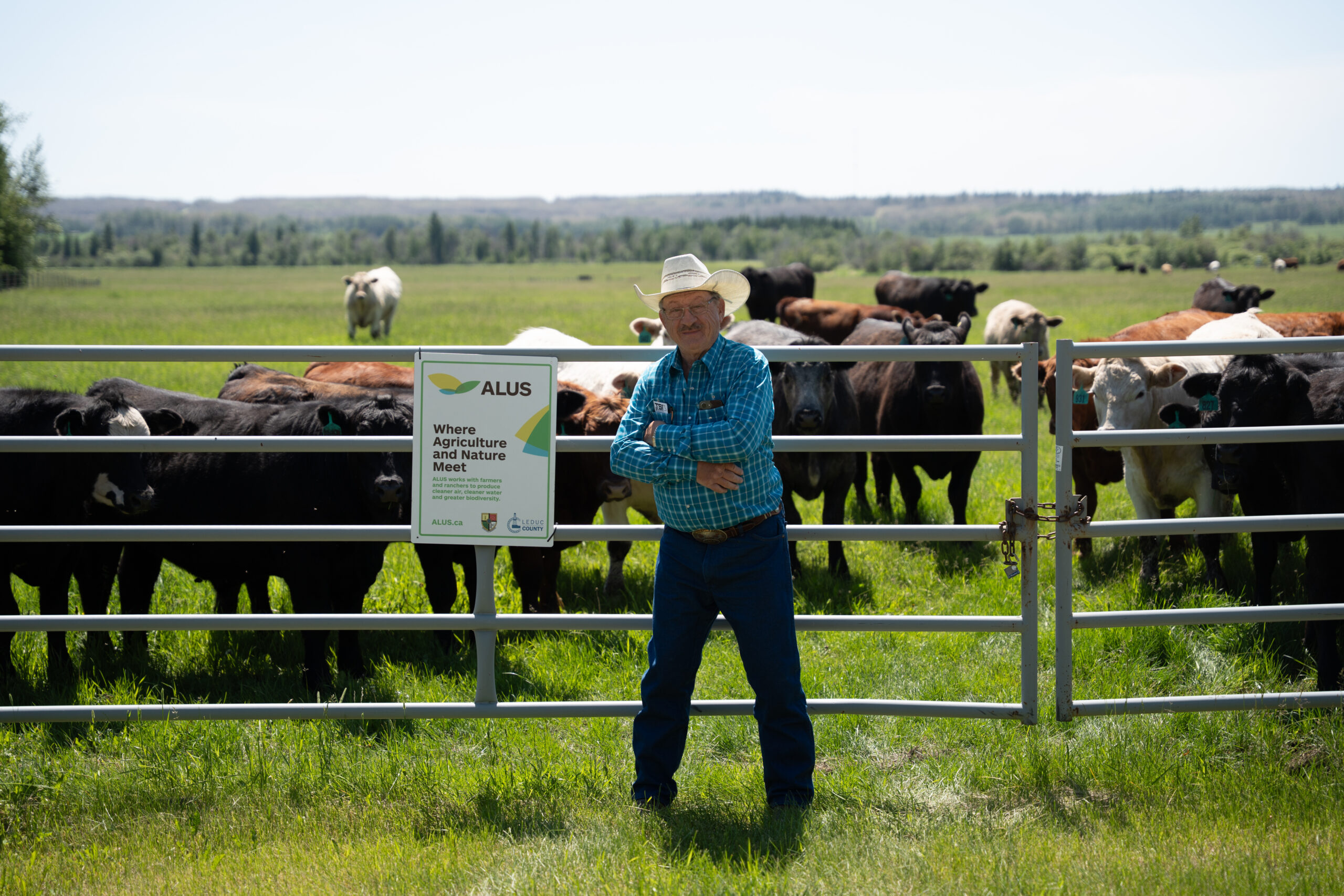
Larry Zieger on his ranch in Alberta
Long before rotational grazing became common in central Alberta, Larry Zieger was already exploring how moving cattle differently could improve the health of his land.
That practical, forward-looking approach has continued throughout his farming career. Today, Larry raises 900 head of cattle across a 1,600-acre operation. Through ALUS Wetaskiwin-Leduc and ALUS Parkland, he has completed projects covering nearly 3 acres, including 1 solar-powered off-site watering systems and many kilometers of riparian exclusion fencing. These projects protect wetlands and sensitive areas while supporting the day-to-day needs of his operation.
His long-standing commitment to working with nature and helping other farmers find practical solutions has earned him recognition as a runner-up for the 2026 Dave Reid Award.
Named in honour of ALUS co-founder Dave Reid, the national award recognizes farmers whose practical leadership is creating new acres of nature on farmland, improving water, habitat and ecosystem health for farms and communities. Larry was recognized in July during the 2026 ALUS National Field Conference in Steinbach, Manitoba, as the ALUS community marked 20 years since the program first began in Manitoba.
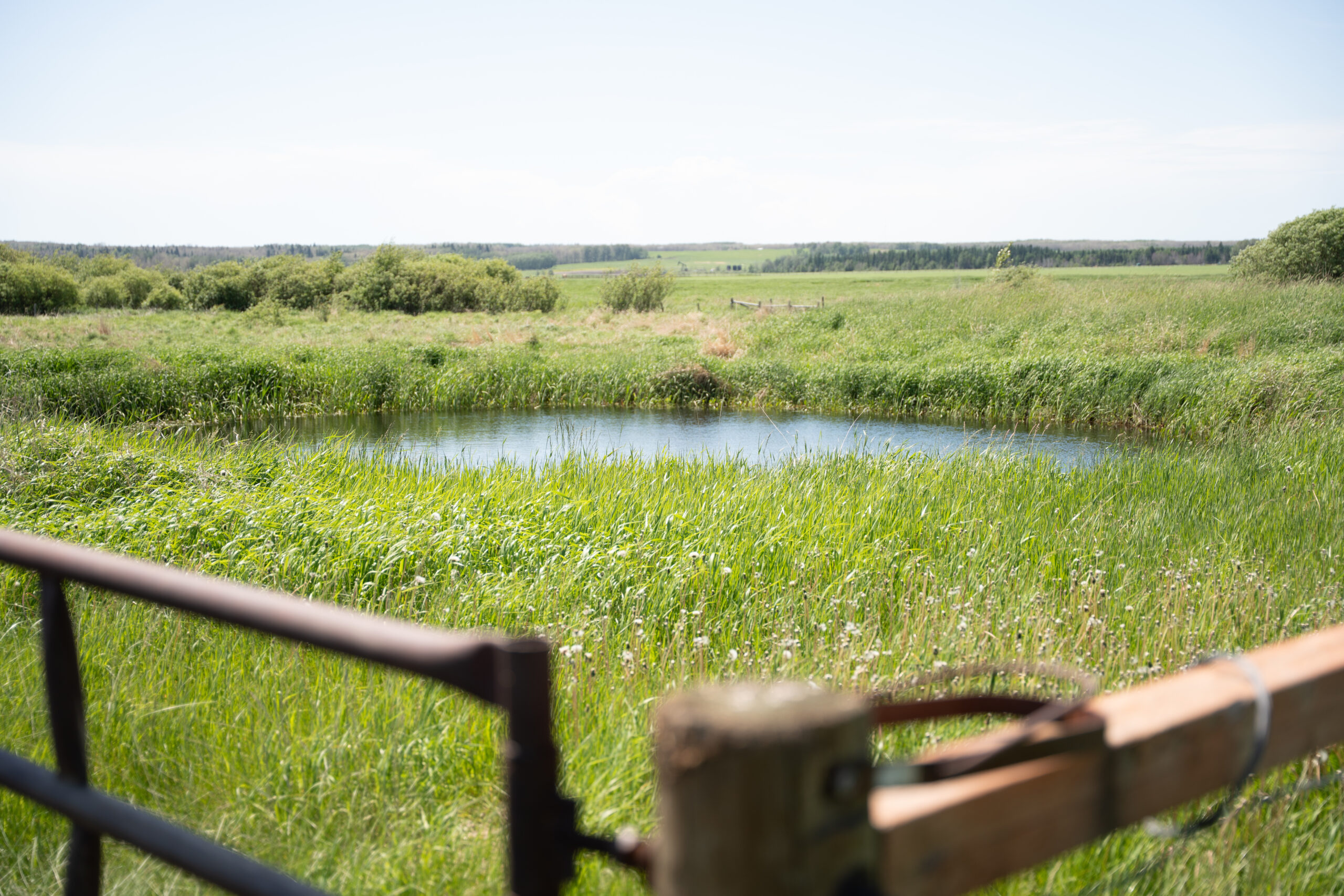
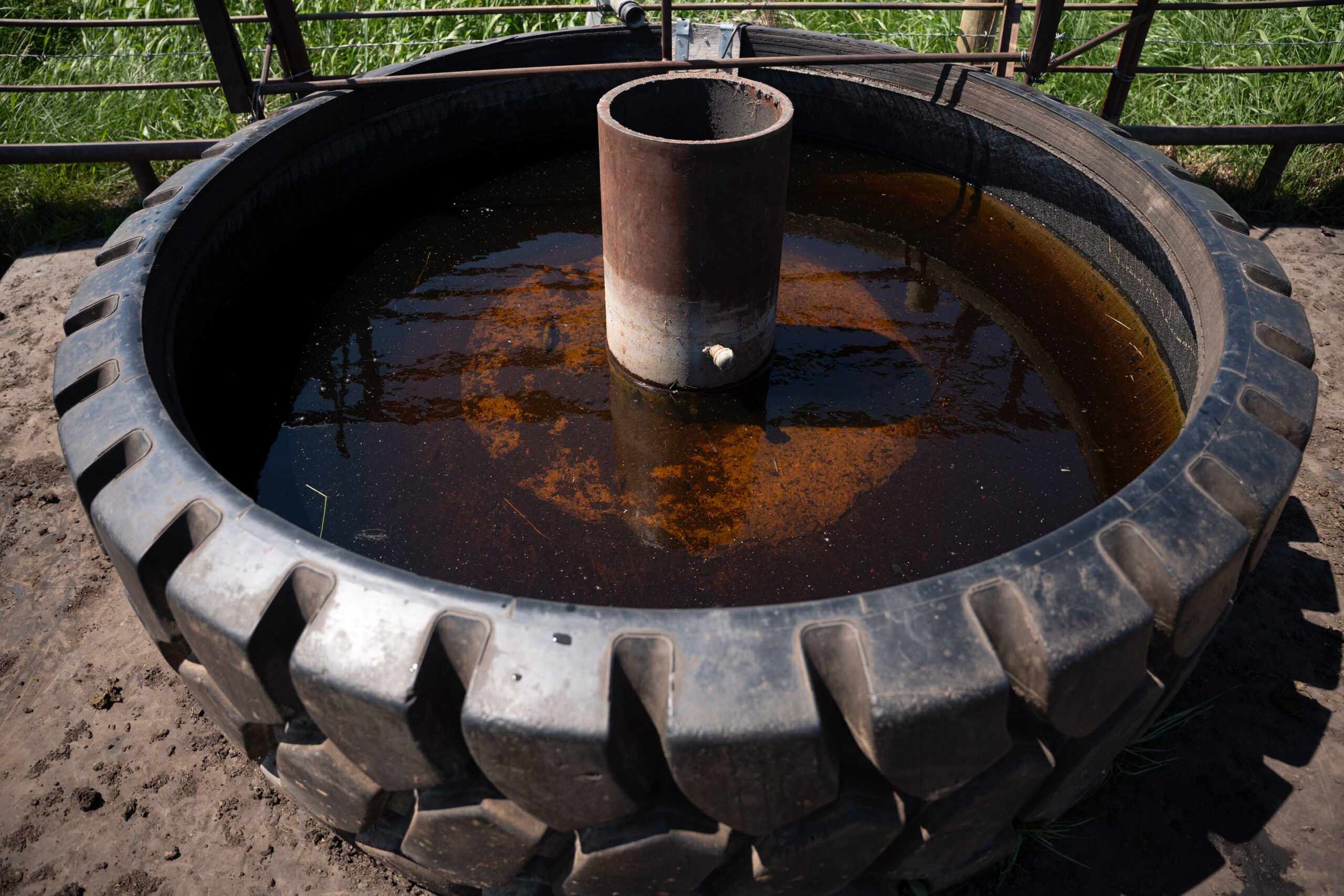
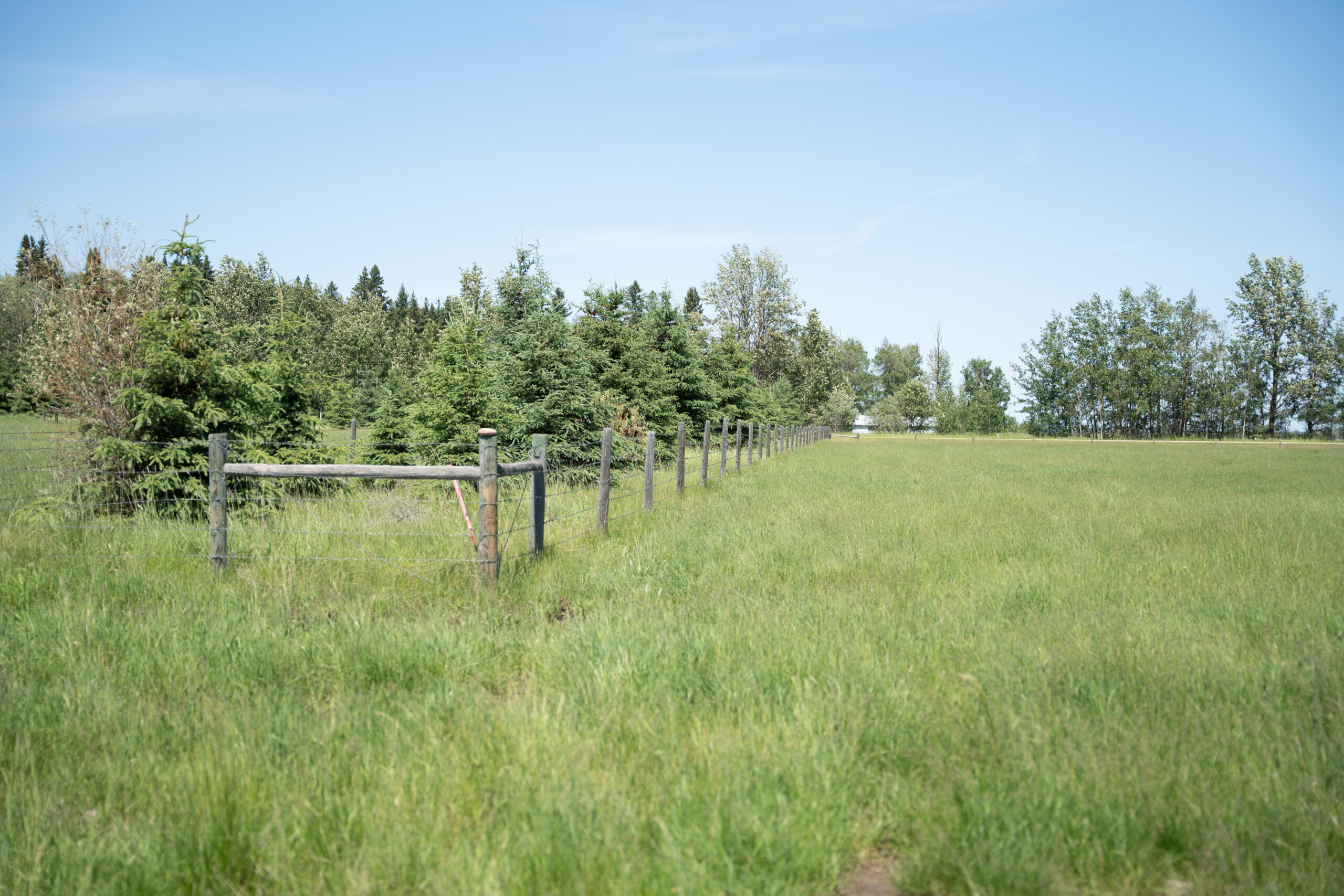
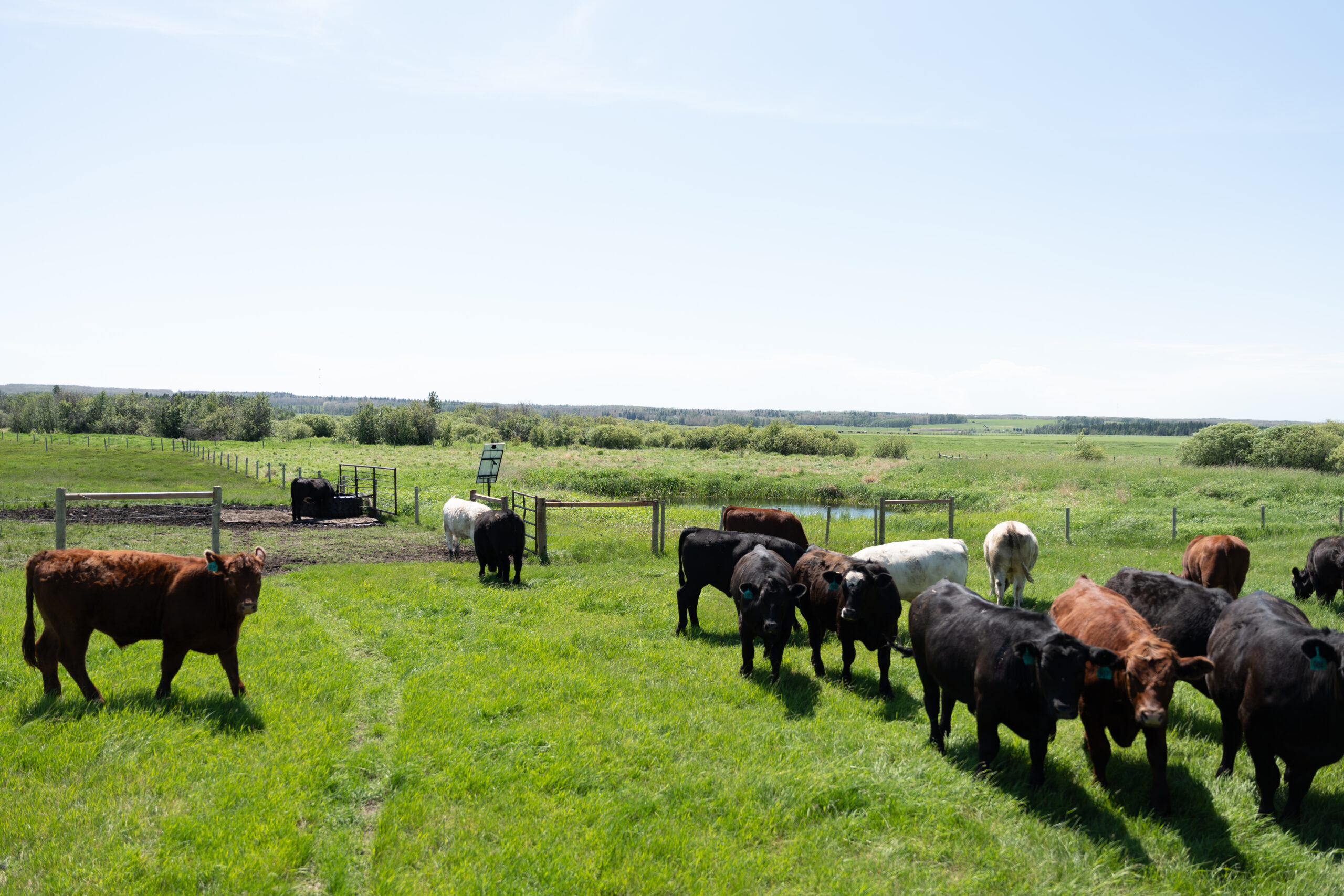
Scroll through to see Larry’s ALUS projects on his ranch
Making ALUS conservation work across a large operation
Technical guidance and financial support from ALUS have helped Larry establish projects that fit the realities of managing a large cattle operation. Off-site watering systems give the herd access to clean, dependable water, while riparian exclusion fencing keeps cattle out of sensitive riparian areas and wetlands.
The scale of the work is significant. Larry has made these investments not only on land he owns, but also on rented land. Across both, his ALUS projects create habitat, support biodiversity and help improve water quality beyond farm boundaries while contributing to a well-managed operation.
For Larry, the value of ALUS also lies in its combination of local knowledge and farmer leadership. Through the Partnership Advisory Committee, farmers have a direct role in shaping local conservation priorities and learn from one another’s experience.
“I am honoured and grateful to be selected as a runner-up for the Dave Reid Award. I appreciate having the ALUS program in my county. It has been a big help on my ranch,” said Larry.
“The program offers the technical and financial support I need to look after and protect sensitive areas and wetlands on my land. It is a win for both the farmer and the environment.”
Sharing practical solutions across the ALUS community
Larry’s leadership is grounded in experience. Since joining the ALUS Wetaskiwin-Leduc Partnership Advisory Committee in 2022, he has helped review project proposals and offered practical advice to farmers considering projects of their own. His involvement with both ALUS Wetaskiwin-Leduc and ALUS Parkland gives him additional opportunities to share what he has learned.
The exchange works both ways. Hearing ideas from other farmers has also helped Larry identify opportunities for his operation.
“As a Partnership Advisory Committee member, I have had the privilege of reviewing project proposals from other farmers, which has given me many ideas for my own operation,” Larry said.
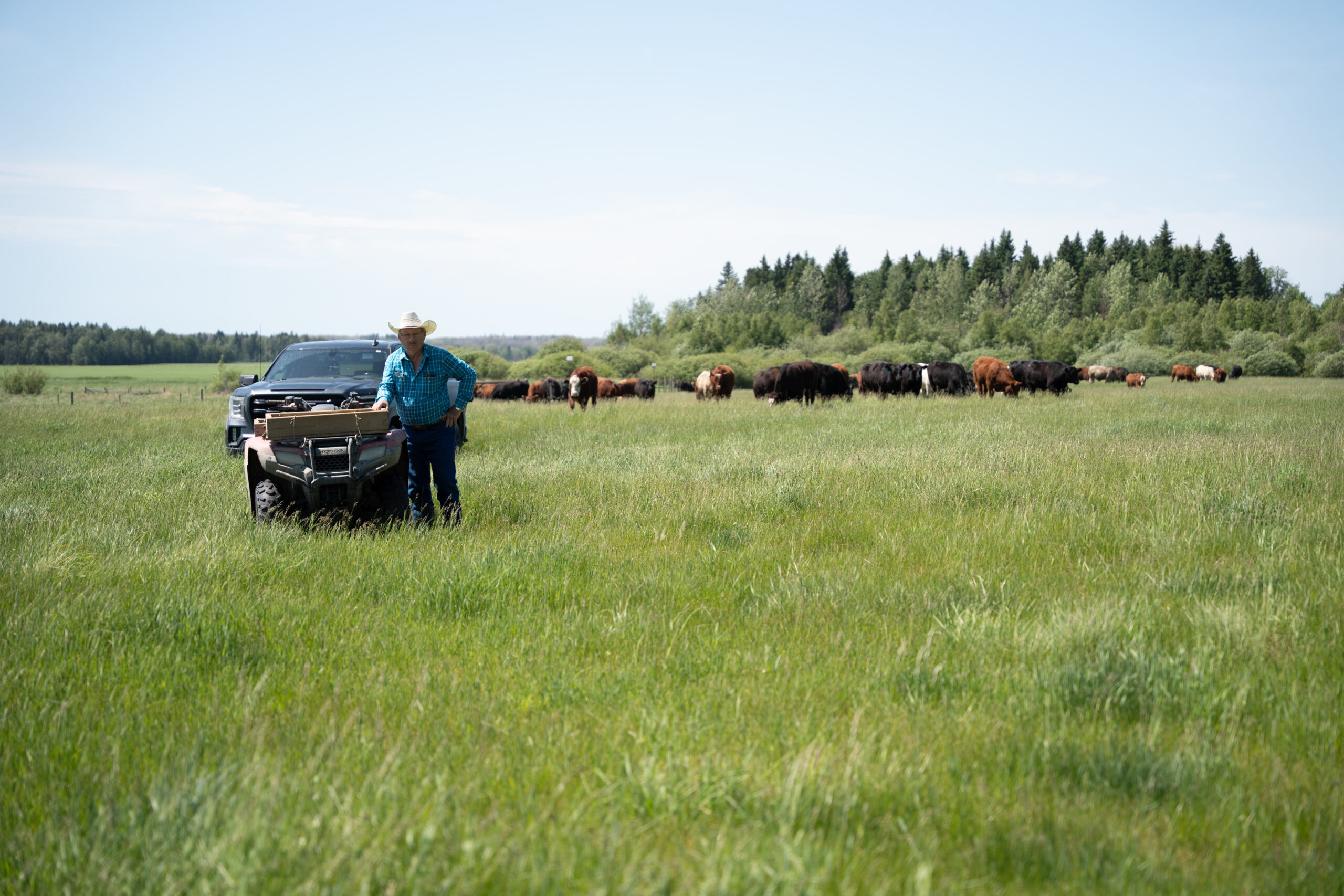
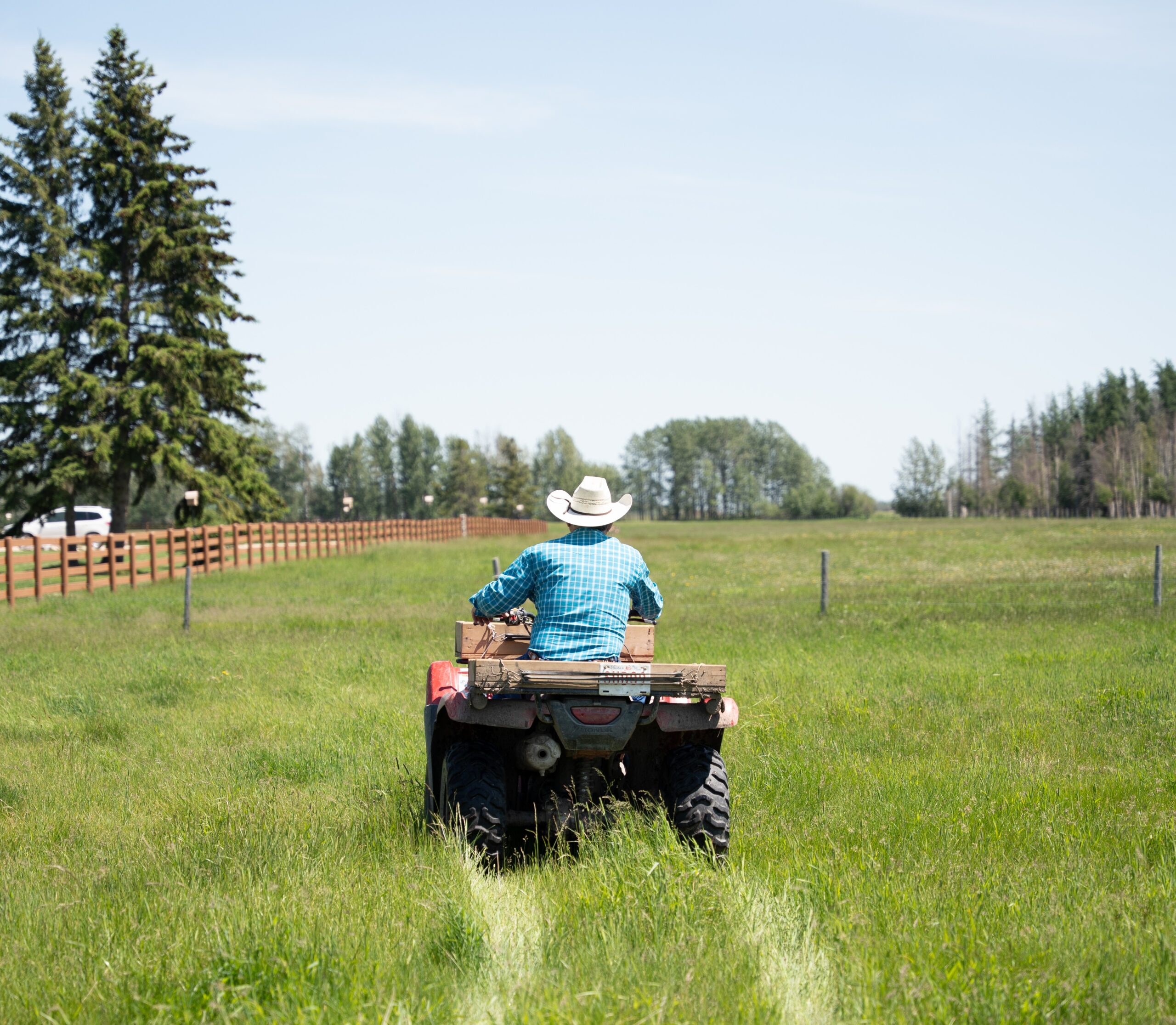
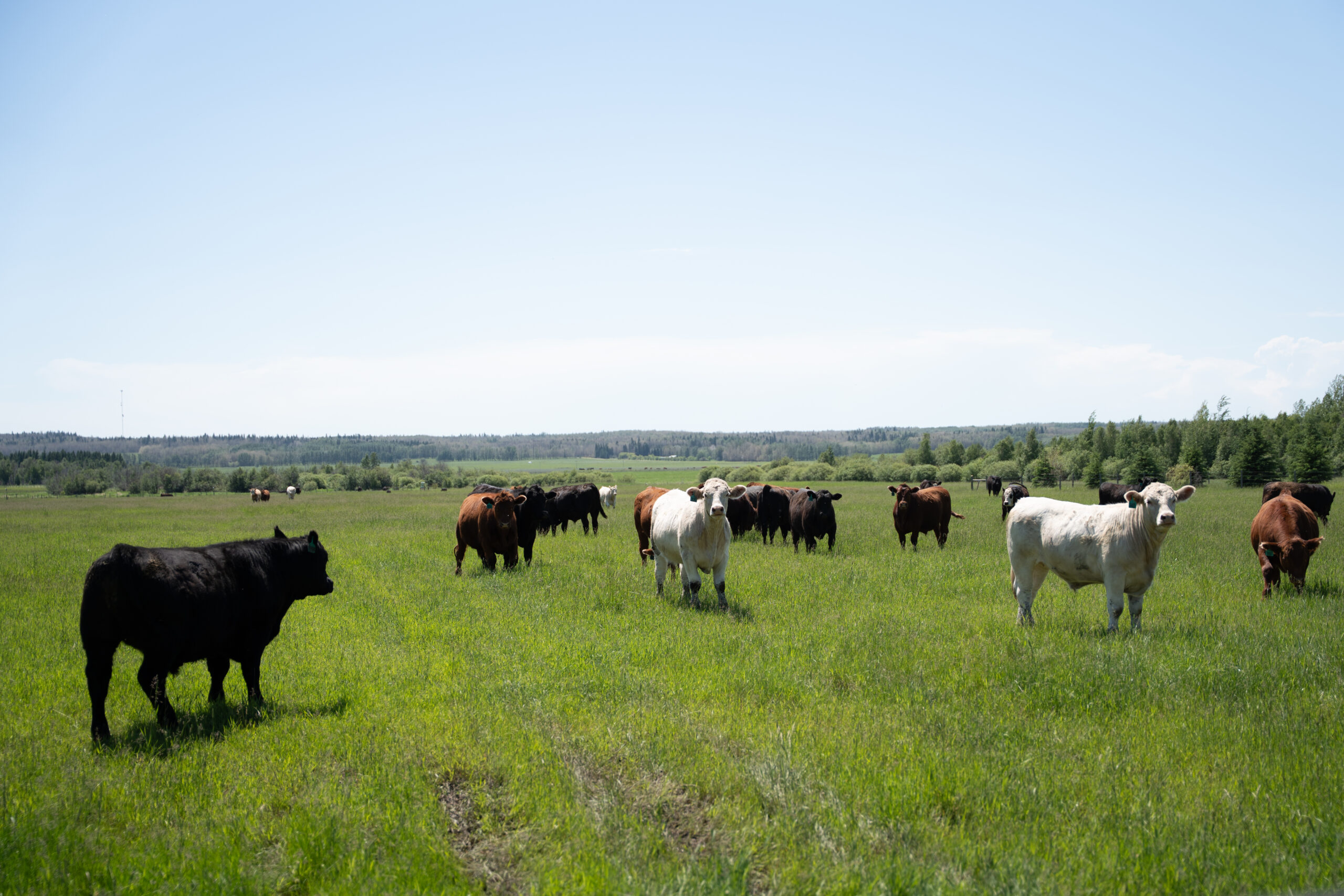
Scroll through to see scenes from Larry’s ranch
He regularly opens his farm for tours, where visitors can see how rotational grazing, alternative watering systems and riparian fencing work at scale. By showing what has worked, discussing what he has learned and offering solutions grounded in the realities of farming, Larry is helping make farmer-led conservation more accessible and supporting its adoption across the region.
Larry’s story shows that environmental stewardship can be ambitious in scale and practical in its delivery. Through ALUS, his willingness to invest, experiment and share what he learns creates benefits beyond his operation: protected wetlands and riparian areas, cleaner water, healthier habitat and practical knowledge that helps other farmers take action.
Continue exploring the 2026 Dave Reid Award series. Read highlights from the 2026 ALUS National Field Conference, where this year’s recipients were recognized, and meet 2026 Dave Reid Award winners Sean and Holly LaBrie and fellow runner-up Harold Janzen.