
ALUS works to support and benefit biodiversity in the communities it operates in, collaborating with researchers to verify the outcomes.
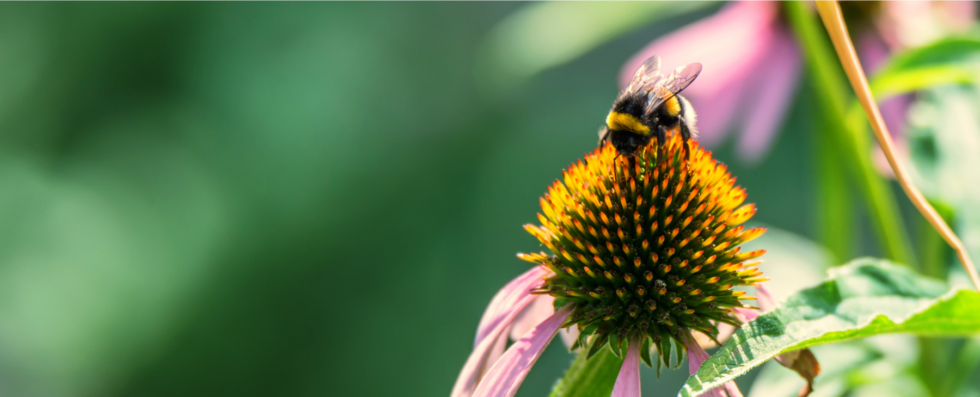
Biodiversity is the multitude of living species that we find around us, animals, plants, fungi and microorganisms — the many things that comprise and share our ecosystems.
The diverse biology of these beings comprises a complex web of interdependent relationships, one living thing supplying habitat or food for another and so on. This is sometimes called the web of life or ecosystems.
ALUS Impacts
ALUS works with farmers and ranchers to create and maintain projects that increase biodiversity and provide habitat for a variety of species. These can include birds, insects, mammals, plant species, soil microorganisms, and others, including species at risk like swift fox or bobolink
ALUS projects support biodiversity by fostering the relationship between agricultural land and the ecosystems those lands exist within. ALUS achieves these outcomes by partnering with farmers and ranchers who use parcels of their lands differently, land that might otherwise be less productive. By working with ALUS, farmers and ranchers are empowered to make choices about the use of their land, supporting biodiversity and the co-benefits that support their agricultural work.
Farmers and Ranchers Making a Difference
Say a farmer wants to introduce a native tallgrass prairie onto a flood-prone part of their land. That, in turn, supports native pollinators that can help crop pollination and bring other species to the land, like insects that might prey on pests. So, the prairie benefits the farmer and the environment, bringing more species and creating habitat for them, improving biodiversity.
Biodiversity helps ensure that nature is rich and bountiful, supporting human communities with food, clean water and other vital ecosystem services.
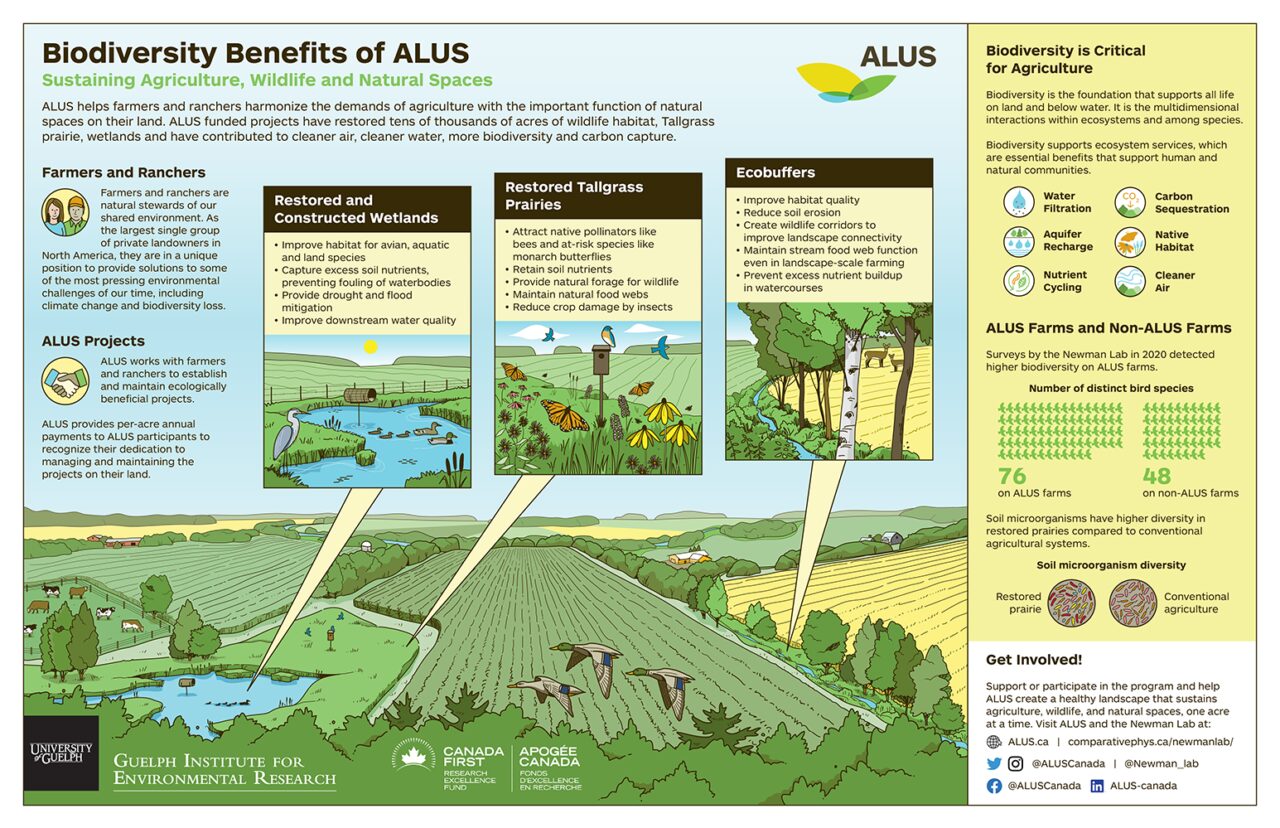
Through it’s many research partnerships, ALUS works to verify and provide hard data to support the efficacy of its landscape work. The infographic below is one example of outcomes studied and reported by field researchers, in this case Dr. Amy Newman, Newman Labs, and her team at the University of Guelph.
How a Few Extra Weeks Can Save a Species
Sometimes conservation isn't about doing more. It's about waiting. Every spring, George and Melaney Matheson begin noticing familiar visitors in their hayfields.The bobolinks have returned. After flying thousands of kilometres from their wintering grounds in South...
ALUS Welcomes Estrie as the Newest ALUS Community
ALUS is proud to announce the launch of ALUS Estrie, a new community led by UPA–Estrie in collaboration with regional partners. This marks an important step in the continued growth of the ALUS network across Quebec and Canada.From left to right: Jennifer Loschiavo,...
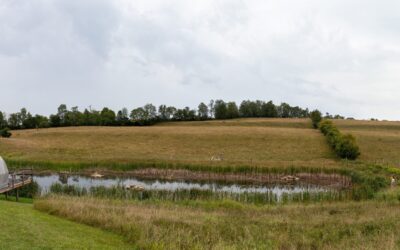
Ontario investment supports farmers restoring habitat for species at risk across 885 acres of farmland
ALUS is celebrating the successful completion of a multi-year investment from the Ontario Ministry of the Environment, Conservation and Parks (MECP), supporting farmers to restore and steward important habitat for species at risk across the...